 AgoraVox Italia
Start a WordPress blog or create a free website in seconds. Choose from over 200 free, customizable themes. Free support from awesome humans.
http://www.imhoffpress.worpress.com
Articoli
-
Jäger Stockill Is One of Canada’s Top Young Racers. His Dad Built the Website to Show the World.
3 marzo, di WordPress.com Staff — Customer Stories, success stories, Website Design, wordpress-com
Jason Stockill’s day job is in agriculture — operations manager at a local dealership in Canada, selling tractors, skid steers, the whole deal.
But after hours, he’s been working on something else.
His son Jäger races motorcycles. He is the 2025 FIM MiniGP Canada Champion — six wins, nine podiums in a single season — and has represented Team Canada at the FIM MiniGP World Final twice.
None of it lived anywhere the public could find. Sponsors had nowhere to land. Fans who couldn’t make it to events had nothing to follow.
“I’ve always had this vision in my head of creating a website for Jäger to showcase what he’s doing.”

Why WordPress.com
Jason isn’t a web professional. But his employer had recently relaunched their business website on WordPress — and working through that process gave him a feel for the platform.
“I really found that WordPress’s format was really user-friendly. It was intimidating at first, but not stopping me from doing it.”
He signed up, picked a template, and started building on his own.
The setup was fast — no complicated hosting decisions to figure out, no technical configuration, just straight into building.
Then the WordPress.com team reached out about our Website Design Service. Jason said yes.
How it all came together
Jason shared his vision, and the WordPress.com design experts took it from there — helping him build the site and get it live.

Jason also got support from WordPress.com’s Happiness Onboarding team, who helped him think through the launch strategy.
“Nick Severson has been really helpful in walking me through the strategy for launching my website. I can’t say enough about that experience.”
For someone who doesn’t build websites for a living, that mattered.
Next steps
Today, jagerstockillracing.com covers Jäger’s full championship history, a sponsor section, a merch store, race news, and a newsletter.

The big launch is still coming — podcast, social push, the works. The website is where it all points to.

Your story deserves a home, too
Jason and Jäger’s story started on the track. Now there’s a website that shows the world what they’ve built.
WordPress.com’s Website Design Service pairs you with an expert who guides you through the whole build. You get a professional, fully managed website — no coding, no setup headaches, no doing it alone.
Just a site that’s live in days, with fast and secure hosting included.
Ready to launch yours?
-
12 WordPress SEO Plugins to Try in 2026 (Manually Tested)
25 febbraio, di Anam Hassan — Tips and Tutorials, Plugins, SEO SEO in 2026 means optimizing for both traditional search engines and AI discovery tools — and WordPress gives you the plugin ecosystem to handle both.
The challenge? Figuring out which SEO plugins actually move the needle versus which ones just clutter your dashboard.
We looked at WordPress.com usage data and user ratings, then I tested the top contenders myself. Here are the 12 SEO plugins worth installing, what each one does best, and which ones to skip:
- Yoast SEO Premium — Best for step-by-step SEO guidance as you write
- All in One SEO (AIOSEO) — Best for broad coverage with AI-era features
- The SEO Framework — Best for fast sites that need simple SEO
- Rank Math — Best all-in-one for new sites
- Google Site Kit — Best for tracking how your site performs in Google
- Jetpack Boost — Best for one-click performance improvements
- SureRank — Best for a simple setup with guided assistance
- Xagio SEO — Best for AI-driven management and multi-site keyword research
- Schema & Structured Data for WP & AMP — Best for detailed schema and rich snippets
- Smush — Best for image compression and lazy loading
- Better Robots.txt — Best for controlling crawler access
- Redirection — Best for managing redirects and 404 errors
1. Yoast SEO Premium: Best for step-by-step SEO guidance as you write
- Who should use it: Bloggers and small site owners who want SEO guidance right inside the editor.
- Rating: 4.5/5
- Pricing: Starts at $118/year.
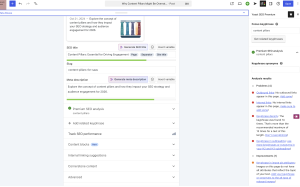
Yoast SEO Premium is a reliable, safety-first plugin that prevents small SEO mistakes from compounding as your site grows. It provides real-time optimization feedback directly in your editor.
You can use this SEO plugin to optimize site pages for target keywords, generate SEO titles and meta descriptions, fix internal linking issues, manage redirects, and meet readability and technical SEO standards.
I found it most useful when maintaining or updating existing content on a website with limited content.
For example, when I tested it on an older site, it flagged broken links and surfaced inconsistent meta descriptions I had missed during regular publishing.
Our favorite features
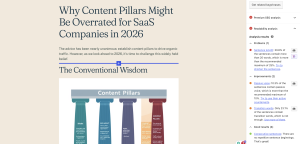
- Multiple-keyphrase optimization: This plugin lets you optimize a page for multiple related keyphrases for better topical coverage.
- Internal links suggestions: It suggests internal links while editing based on existing content.
- AI content assistance: It generates SEO titles and meta descriptions in the editor, with an AI Optimize (beta) feature that suggests on-page improvements for shorter content.
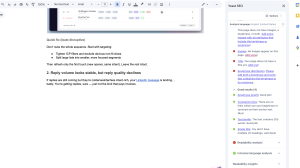
- Google Docs add-on: Yoast offers the same level of SEO guidance within Google Docs.
Pros and cons
Pros:
- SEO guidance is built directly into the editor, so issues are flagged before content goes live.
- Yoast has strong on-page coverage, such as keyphrases, readability, metadata, internal linking, redirects, and structured data in one plugin.
- It includes advanced add-ons (Local SEO, News, Video SEO) under one license instead of separate purchases.
Cons:
- Yoast’s recommendations don’t always align with every content strategy or niche, and can sometimes be irrelevant.
- It may feel limiting for advanced SEO users looking to conduct deep technical SEO audits and experiment with generative engine optimization.
Our take
- Choose Yoast SEO Premium for SEO guidance built into your writing workflow. It’s especially useful for bloggers and small business owners who are learning SEO fundamentals and want step-by-step guidance.
- Skip it if you’re looking for a more advanced tool for technical SEO and AI search visibility.
2. All in One SEO (AIOSEO) — Best for broad SEO coverage with AI-era features
- Who should use it: Users who want hands-on control over SEO from the start and are comfortable managing more settings in exchange for that control.
- Rating: 4.7/5
- Pricing: A free version is available. Paid plans start at $49.50/year.
All-in-One SEO handles site-wide SEO setup with minimal input, then lets you step in and fine-tune details as your site grows.
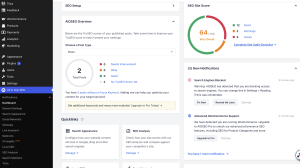
During page-level edits, the optimization panel works like a checklist, grouping tasks into sections for schema markup, social previews, internal linking, metadata, and more.
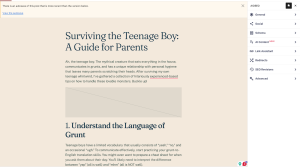
It also includes AI tools that generate SEO titles, meta descriptions, FAQs, and key points — helping you structure content in a way that’s easier for both search engines and AI systems to understand.
The operational visibility stood out the most to me.
Built-in 404 monitoring and redirect management helped me catch and fix broken URLs immediately, without relying on Search Console or extra plugins.
Our favorite features
- Link Assistant: AIOSEO scans your entire site and suggests relevant internal links.
- Schema support and an LLM.txt generator: It lets you add structured data and create LLM.txt files to improve how your content appears in Google and AI search results.
- Google Search Console integration: It pulls key search performance metrics like keyword rankings, clicks, impressions, and average position into WordPress.
- AI content generation: This plugin speeds up on-page SEO (titles, descriptions, FAQs) and nudges you toward more structured content.
Pros and cons
Pros:
- AIOSEO handles both on-page and technical SEO in one workflow, reducing the need to juggle multiple plugins.
- It gives power users more flexibility than Yoast, with fewer forced scoring rules and more control over how SEO is applied.
- This plugin scales well for growing sites and content teams that need to manage SEO consistently across many content types.
- It makes structured data easier to manage at scale, reducing manual markup work as sites grow, and offers AI search-specific features.
Cons:
- The sheer number of settings and modules can feel overwhelming for beginners, even with the guided setup.
- Site audits can take longer to complete on large websites, and the TruSEO scoring system may feel strict if your content strategy doesn’t match its built-in recommendations.
Our take
- Pick AIOSEO if you want a complete website SEO setup that prepares you for modern AI search. It works well for new sites, migrations, and WooCommerce stores that need both SEO basics and operational tools like 404 monitoring and redirects.
- Skip it if you want a lightweight setup or prefer handling technical SEO and monitoring outside WordPress.
3. The SEO Framework — Best for advanced users who want clean, automated SEO
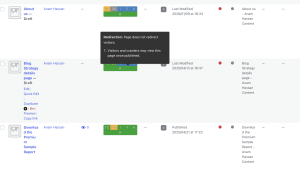
- Who should use it: Developers and experienced WordPress users who don’t need SEO scoring or step-by-step guidance.
- Rating: 4.9/5
- Pricing: A free version is available. Paid plans start at $84/year.
The SEO Framework is a lightweight, automation-first SEO plugin that handles core SEO tasks quietly in the background without constant prompts, ads, or upsells.
When I first tested it on an inherited site, it automatically filled in titles and meta descriptions and generated an XML sitemap immediately, without any setup.
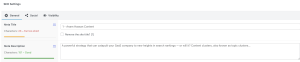
The one trade-off is that it doesn’t guide you step by step or score keywords. So, if you rely on prescriptive SEO prompts, know that this plugin is minimal by design.
The SEO Framework works best on performance-sensitive sites where speed and minimal overhead matter more than in-editor guidance.
Our favorite features:
- Auto-generated meta tags: This plugin automatically creates SEO titles and meta descriptions for posts, pages, and archives using content-based logic.
- Built-in XML sitemap and canonical handling: It generates XML sitemaps and applies canonical URLs automatically to prevent duplicate-content issues.
- Unbranded, ad-free interface: It stays out of the way with no upsells, nags, or SEO “score” prompts — so the plugin feels native inside WordPress.
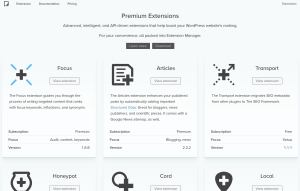
- Modular extension system: It lets you add advanced functionality (such as structured data, local SEO, or monitoring) through optional extensions that can be enabled individually.
Pros and cons
Pros:
- You can publish content faster because meta titles and descriptions are generated automatically.
- Setup takes minutes since smart defaults handle technical SEO without requiring configuration decisions.
- It keeps your site fast because the plugin is extremely lightweight compared to bloated alternatives.
Cons:
- It lacks content analysis and keyword optimization tools, so you won’t get real-time guidance on readability, keyword placement, or SEO improvements as you write.
- There are no native FAQ or How-To blocks: Structured data requires manual setup or third-party tools.
Our take
- Choose The SEO Framework if you already understand SEO basics and want fast, automated technical SEO handled quietly in the background. It’s ideal for performance-sensitive sites where speed and minimal interface clutter matter more than in-editor guidance.
- Skip it if you want hands-on SEO help, keyword checks, or extensive writing feedback.
4. Rank Math — Best all-in-one SEO for new sites
- Who should use it: New sites and creators who want maximum SEO features early on.
- Rating: 4.9/5
- Pricing: A free version is available. Paid plans start at $107.88/year.
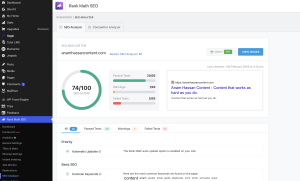
Rank Math combines on-page SEO tools, schema markup, redirects, and basic technical SEO features into a single plugin — with many capabilities available on the free plan.
At the page level, Rank Math is highly directive. Each page includes a checklist and score that flag issues with title structure, focus keyword usage, and indexing before publishing.

Once schema templates are set up, you can reuse them across content types instead of configuring structured data page by page.
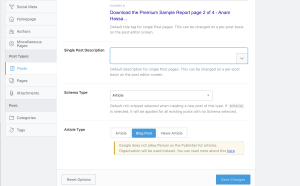
For the most part, visibility makes Rank Math powerful for scaling sites and teams, but it’s best for users who want active SEO guidance rather than hands-off SEO.
Our favorite features
- Score-based SEO checks: Rank Math assigns an overall score and flags optimization issues without forcing step-by-step fixes.
- Multiple focus keywords: You can optimize a single page for several related keywords.
- Search Console data in your dashboard: You’ll receive basic performance data directly inside WordPress.
- Modular design: It allows you to turn features on or off so you only use what you really need.
Pros and cons
Pros:
- Rank Math provides clear checklists and scoring inside the editor, so it’s obvious what needs fixing before publishing.
- You get access to most SEO settings upfront, which makes it easy to adjust schema, indexing rules, and analytics as your site evolves.
- Shared rules, templates, and scoring make it easier to keep SEO consistent across multiple authors and pages.
- You can set up structured data once per content type and reuse it, saving time on content-heavy or multi-format sites.
Cons:
- Rank Math asks you to make several SEO decisions early on — sometimes before you fully understand what you actually need to do.
- The checklist-and-score approach can push users to optimize for the score rather than for search intent or strategy.
- While powerful, schema templates and settings work best when you already understand how structured data should be applied across different content types.
Our take
- Go for Rank Math if you run a content-heavy site and want tighter control over how posts appear in search.
- Skip it if you’re running a small or new site and only need simple, hands-off SEO basics.
5. Google Site Kit — Best for understanding how your site performs in Google
- Who should use it: Site owners who want Google performance data inside WordPress.
- Rating: 4.2/5
- Pricing: The plugin is free, but connected Google services may have their own costs.
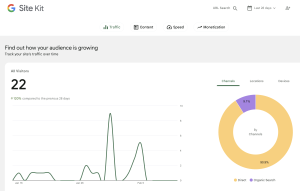
Google Site Kit pulls key data from Google tools like Search Console, Analytics, and PageSpeed Insights into your WordPress dashboard. You can monitor search performance and Core Web Vitals in one place.
When I installed it, I got a clear, high-level view of how my site was performing in Google, within minutes.
I could quickly see trends in search traffic and analyze technical aspects like the Core Web Vitals without jumping between dashboards.
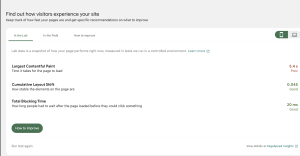
All in all, Site Kit works best as a monitoring and context dashboard to identify where problems exist.
From there, you can dig deeper into Search Console or use dedicated SEO and performance plugins to address them.
Our favorite features
- Unified Google data: Site Kit brings traffic, search visibility, Core Web Vitals, and AdSense earnings into a single WordPress dashboard.
- Search funnel visibility: It shows which queries surface your pages, how often they appear in search, and how many clicks they earn.
- Per-page performance stats: You can check Analytics and Search Console metrics for individual posts and pages, so you can see what content drives results.
- No-code Google setup: It connects tools like Analytics, Search Console, Tag Manager, and AdSense without editing your theme or touching site code.
Pros and cons
Pros:
- It helps you monitor traffic and search performance without switching tools.
- You can connect Google services without touching code, because Site Kit handles the technical setup automatically.
- All features are available at no cost, making it an accessible monitoring tool for basic visibility.
Cons:
- Site Kit surfaces trends and signals, but it doesn’t provide deep analysis such as conversion tracking, advanced user behavior, or detailed diagnostics.
- It shows where issues exist, but resolving SEO or performance problems still requires dedicated plugins or native Google dashboards.
Our take
- Choose Google Site Kit if you’re already using Google services and want to see basic metrics in WordPress without paying for a premium analytics plugin and switching between tools. Use it as a prioritization layer to decide which SEO or performance issues to address first.
- Skip this if you need detailed product, funnel, or revenue breakdowns inside WordPress — Site Kit focuses on high-level Google metrics rather than full reporting.
6. Jetpack Boost — Best for one-click performance improvements
- Who should use it: Site owners who want core security, monitoring, and basic SEO handled automatically with minimal setup.
- Rating: 4.7/5
- Pricing: A free version of Jetpack is available. Paid plans start at $119.40/year for the first year (introductory discount; regular price is $239.40/year).
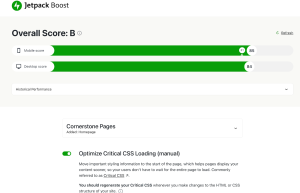
Jetpack Boost improves Core Web Vitals using a small set of safe, automated performance optimizations, including Critical CSS, deferred JavaScript, and improved image loading.
When I tested it on a lightly optimized site, it immediately highlighted issues related to Critical CSS, deferred JavaScript, and oversized images.
Instead of tweaking dozens of technical settings, the SEO plugin focuses on a narrow set of optimizations designed specifically to safely improve Google’s performance metrics.
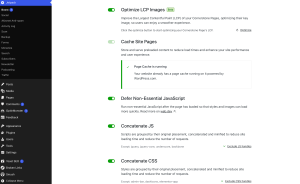
It’s a good fit for site owners who want quick, measurable improvements in Core Web Vitals with minimal effort.
Tip: The full Jetpack plugin also covers security, backups, analytics, and more. It’s included for WordPress.com users, with features like real-time backups and SEO support available on Business plans and higher.
Our favorite features
- One-click Critical CSS: Jetpack loads essential page styles first so content appears faster, without breaking layouts.
- LCP-focused optimization: The most important content appears sooner, improving Core Web Vitals scores.
- Deferred JavaScript: It delays non-essential scripts so text and layout load first, reducing blank screens on slower devices.
- Page Cache: It saves pages as static files so they load faster for visitors, reducing server load and improving overall response times.
Pros and cons
Pros:
- Jetpack improves Core Web Vitals with one-click optimizations like Critical CSS, deferred JavaScript, and lazy loading.
- You can feel the difference quickly, especially on content-heavy pages, making it a solid baseline performance upgrade.
- The optimizations are designed to be safe and WordPress-friendly, so you’re less likely to run into layout issues or broken functionality.
Cons:
- Boost is designed to stay simple; it won’t replace a fully custom performance setup for advanced needs.
- Controls are mostly toggle-based, which means you get less flexibility than with tools built for deep tuning.
Our take
- Choose Jetpack Boost if you want a simple, low-maintenance way to improve site speed and Core Web Vitals.
- Skip it if you already have a heavily customized performance setup — you’ll get more value from a tool built for advanced tuning.
7. SureRank — Best for simple setup and guided SEO assistance
- Who should use it: Content creators who want a “set it and forget it” SEO for essentials.
- Rating: 4.6/5
- Pricing: A free version is available. Paid plans start at $149/year. $99 with a first-year discount. They also offer lifetime plans.
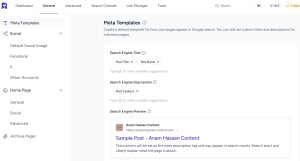
SureRank keeps SEO basics in one place: titles and meta descriptions, social previews, sitemaps, and default schema.
When I tested it, the first audit surfaced a short list of fixes I could act on immediately. Then, the editor kept flagging common issues as I worked, like missing alt text, oversized images, or titles that ran too long.
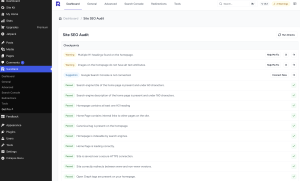
It adds default schema (like BreadcrumbList and Article) and keeps your SEO titles/descriptions consistent with your social share previews.
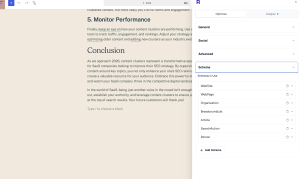
Altogether, SureRank works best for small blogs, portfolios, and simple business sites that need essential SEO with minimal setup.
Our favorite features
- Focused SEO audit: SureRank highlights only the most important issues, so you know what to fix first without noise.
- Unified metadata workflow: SEO titles, schema, and social previews live in one place, reducing mismatches.
- Search Console integration: It shows key performance metrics, clicks, impressions, and top queries inside WordPress.
- Indexing controls (robots + canonicals): It lets you noindex low-value pages and set canonical URLs to reduce duplicate-content issues.
Pros and cons
Pros:
- The plugin is lightweight by design, so it keeps site overhead low and performance impact minimal.
- It helps you catch practical on-page SEO issues as you write, like missing alt text or overly long titles, without pushing you toward rigid scores.
- It keeps SEO, schema, and social metadata in a single workflow, reducing mismatches between search results and social previews.
Cons:
- SureRank is not well-suited for large or complex sites that require granular control or agency-level workflows.
- It has a smaller ecosystem and potentially fewer third-party resources due to its relatively recent launch.
Our take
- Choose SureRank if you’re a content creator, blogger, or small business that needs basic SEO applied with minimal effort. It’s most useful when updating existing content or managing content on a smaller site.
- Skip it if you’re an SEO consultant, power user, or enterprise site that needs advanced control.
8. Xagio SEO — Best for AI-driven SEO management and keyword research
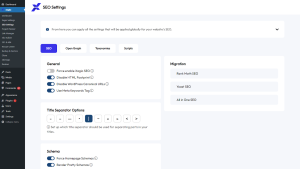
- Who should use it: Agencies and advanced teams managing SEO across multiple WordPress sites.
- Rating: 4.9/5
- Pricing: A free version is available. Paid plans start at $467/year.
Xagio is an SEO system built for planning and managing SEO at the site level, not just optimizing individual pages.
When I tested it, this SEO plugin analyzed existing pages first and grouped them by the keywords they were already ranking for. It then surfaced where pages were competing with each other or missing clear search intent.
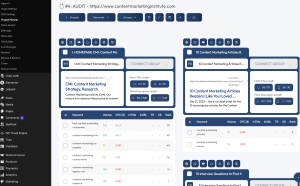
Instead of fixing posts individually, you work from a central planner where titles, descriptions, and headings can be updated across multiple pages at once.
This makes site-wide cleanup and restructuring far faster than editing pages manually.
Our favorite features
- Cluster-based optimization: Xagio optimizes each page for groups of related keywords, not just a single focus term.
- Centralized project planning: You can see all pages, keyword groups, and rankings in one site-wide dashboard.
- Intent-aligned page editor: It keeps titles, H1s, schema, and metadata tied to a single keyword group.
- Integrated rank tracking: This plugin connects keywords directly to the pages they rank for, without external tools.
Pros and cons
Pros:
- You can manage SEO at the site level, so updating titles and metadata across many pages doesn’t require page-by-page edits.
- It groups keywords by page and intent, helping prevent keyword overlap and content cannibalization.
- Xagio provides clear competitive direction by showing which keywords and page structures already perform in the SERPs.
- It reduces the need for multiple SEO tools by combining keyword planning, competitor research, and bulk optimization in one system.
Cons:
- It has a steeper learning curve than in-editor SEO plugins, especially for non-technical users.
- The interface can feel heavy, with many settings and views visible at once.
- Teams using dedicated analytics or keyword tools may find some features redundant or less substantial than specialist competitors.
Our take
- Go for Xagio SEO if you’re running multiple WordPress sites or need advanced SEO automation. It’s built for managing SEO across projects, not optimizing pages one by one.
- Skip it if you’re a solo blogger or a small business with basic SEO needs.
9. Schema & Structured Data for WP & AMP — Best for fine-grained schema and rich snippets control
- Who should use it: Ecommerce stores, review sites, and local businesses that rely on rich results and need strong support for Product, Review, and LocalBusiness schema.
- Rating: 4.5/5
- Pricing: It has a free plan. Paid plans start at $99/year.
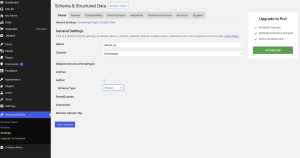
Schema & Structured Data for WP & AMP is built for sites that need more control over structured data than most SEO plugins offer.
Instead of applying one generic schema type site-wide, it lets you assign schema by content type — so products, articles, FAQs, and How-To pages stay correctly marked up.
Once configured, those rules apply automatically across your site, keeping markup consistent and reducing manual work.
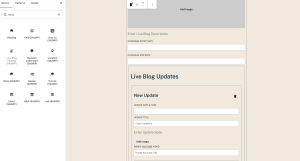
I especially like that you can add schema directly from the block editor using dedicated schema blocks, which is especially useful for FAQ, How-To, and review content.
Our favorite features
- Site-wide schema control: It defines core entity data once and applies it consistently across the site.
- Content-type–based rules: It applies the schema by post type or taxonomy, so markup stays predictable and accurate.
- Gutenberg schema blocks: This plugin converts visible FAQ, How-To, and review blocks into matching structured data.
- Explicit AMP schema handling: It separates AMP schema from non-AMP pages to reduce mobile validation issues.
Pros and cons
Pros:
- Schema can be assigned by content type, so product pages, blog posts, and FAQs don’t end up using the same generic markup.
- Templates let you define a schema once and apply it across multiple posts, keeping markup consistent at scale.
- The free version includes a broad set of schema types, covering most common use cases without needing an upgrade.
Cons:
- This plugin requires some schema knowledge to use effectively, especially when configuring advanced rules or templates.
- It can conflict with other SEO plugins if schema output isn’t carefully managed, leading to duplicate markup.
Our take
- Choose Schema & Structured Data for WP & AMP if you run an ecommerce store, review site, or local business alongside your existing SEO setup. It handles schema markup, but doesn’t replace a full SEO system.
- Skip it if you’re just getting started with SEO and want an all-in-one solution.
10. Smush — Best for image compression, resizing, and lazy loading
- Who should use it: WordPress beginners, content creators, and small business owners who want hassle-free image compression.
- Rating: 4.8/5
- Pricing: A free version is available. Paid plans start at $30/year.
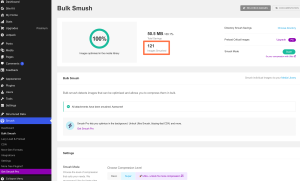
The Smush plugin focuses on image optimization, automatically compressing images as you upload them to help pages load faster.
New uploads are optimized immediately, and oversized images are clearly highlighted as you browse the site, which makes performance issues easy to spot and fix.

For best results, I found that enabling both resizing and metadata removal had more impact than compression alone.
All in all, I found Smush works best on smaller or newer sites where ongoing uploads matter more than bulk cleanup.
Our favorite features
- Bulk optimization for existing libraries: You can optimize unlimited images without running heavy processes on your own server.
- Lazy loading: Smush delays loading offscreen images until users scroll to them.
- Safe image resizing: It notifies you when you upload images that exceed recommended dimensions.
- Smart compression: It shrinks image file sizes without a noticeable drop in quality, helping pages load faster.
Pros and cons
Pros:
- It starts optimizing images automatically after activation, so new uploads are handled without ongoing manual work.
- This plugin makes it easy to spot oversized or unoptimized images that hurt performance.
- It covers essential image optimization in the free plan, which is enough for basic compression and lazy loading.
Cons:
- Bulk optimization capped at 50 images per batch makes cleaning up large image libraries slow and repetitive.
- It’s focused just on images, so you’ll need additional tools for broader performance or SEO optimization.
Our take
- Choose Smush if images are slowing your site down. This plugin is best for fixing image-related performance issues on image-heavy sites.
- Skip it if you need basic image optimization while your images are already handled by a CDN and your performance stack covers compression, resizing, and lazy loading.
11. Better Robots.txt — Best for customising crawler access and blocking unwanted bots
-
14 Unique Ways WordPress.com Makes Site Ownership Easier
24 febbraio, di Nick Schäferhoff — Tips and Tutorials, wordpress-com On WordPress.com, you can manage the entire lifecycle of your website — setup, development, launch, day-to-day management, and potential adjustments — on a single platform that grows with you.
When I first learned to build WordPress sites, I had to stitch them together from different tools and vendors. Think of connecting your domain registrar to a hosting provider, installing backup, security, and performance plugins — that sort of thing.
When I switched to WordPress.com, the experience became entirely different. Here are 14 ways it makes site ownership easier.
1. Launch your site in a single, ready-to-run environment
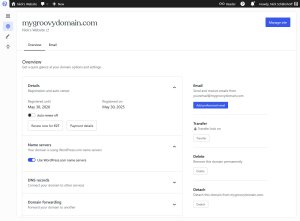
On WordPress.com, getting a domain, hosting, security, backups, and performance are already configured.
Your site runs on WordPress-first infrastructure, built to handle updates, plugins, traffic spikes, and security without you having to tune the stack yourself.
Here’s what you get:
- Hosting optimized specifically for WordPress.
- Your domain automatically connects to your site (if you purchase it through WordPress.com).
- Automatic real-time backups and one-click restore (on Business and higher).
- Ready-to-use, top-notch security features.
- Performance optimization out of the box.
In short, instead of spending time setting up your site’s infrastructure, you can get online — and stay online — while focusing on growing your business.
2. Build with AI, but keep full control
On WordPress.com, AI helps you launch quickly — while still creating a real WordPress site you control.
Some AI website builders generate sites inside proprietary platforms, which can make it harder to customize, add advanced features, or move your site elsewhere later.
That’s different on WordPress.com.
The AI website builder creates your site using native WordPress functionality, including proven themes, patterns, and the Block Editor. Instead of generating loose code, it assembles your site from building blocks that are designed to work well together.
Because of that, you’re building directly on WordPress from day one. You can redesign, add features, or scale your site over time without rebuilding it from scratch.
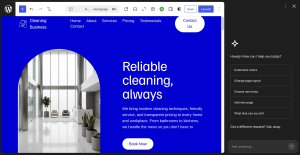
And it doesn’t stop after launch. With the WordPress AI Assistant, the AI truly understands your site’s content and layout. You can use it to add smart improvements and optimize your site for better results.

3. Grow your site without headaches
On WordPress.com, success doesn’t create extra work or extra fees. When your site starts getting attention, you don’t need to scramble to keep it online or worry about sudden costs.
No matter if you have 10 visitors or 100,000, all WordPress.com plans come with:
- Unlimited bandwidth with no overage fees.
- A 99.999% uptime target.
- Global caching and CDN.
- Free SSL encryption.
- Built-in malware scanning and attack protection.

That means you’ll never be forced to upgrade for performance reasons. While you can upgrade to a Business or Commerce plan for advanced features, your site will remain safe and stable on any plan.
4. Bring familiar AI tools into your WordPress workflow
WordPress.com connects your site to the AI tools you already use.
You can build themes and plugins with AI, connect Claude to analyze your real site data, or use the built-in WordPress AI Assistant directly inside your dashboard.
These integrations are officially supported and permission-based, so you control what AI can access.
Instead of copying content into a generic chatbot, AI works with your actual WordPress environment — your posts, pages, traffic data, and structure.
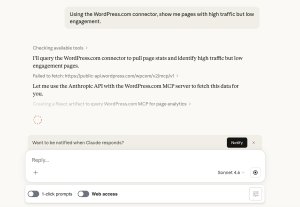
All this helps you focus on the actions, pages, content, and opportunities that actually drive business results.
5. Work with real humans who treat your site like it matters
That said, you don’t have to figure everything out alone.
With WordPress.com’s website design services, real WordPress experts build your site with you — refining your vision, making sure it looks professional, and helping you launch with confidence.
Take Jason, a WordPress.com user who wanted a website to support his son’s motorcycle racing journey. He worked directly with the WordPress.com team to refine the design and structure, so it felt credible and ready to launch.

But the help didn’t stop at launch. The team continued guiding him through SEO setup, plugin choices, and planning his rollout strategy.
That’s the difference. You’re not just buying a template. You’re getting real people who help you build it right — and stay available as your site evolves.
6. Restore your website, even if you are locked out
Every WordPress.com site is automatically backed up behind the scenes. You don’t need to install a plugin or set up a backup schedule — it’s handled for you.
On Business and Commerce plans, you can also restore your site yourself with one click — even if you can’t access your WordPress dashboard.
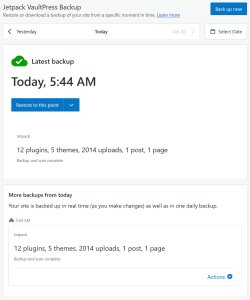
Like all other features, backups and restores happen on the platform level. This means you don’t need to log in to your site or server. Trust me, the last thing you want to do in this situation is struggle to get your website back.
7. Automate site updates without worrying
WordPress.com keeps your site up to date automatically — without you managing core updates, plugins, themes, or server software.
On most setups, it’s your responsibility to update WordPress core, plugins, themes, and even PHP. On WordPress.com, that maintenance is handled for you and coordinated to reduce compatibility issues and update-related errors.
How so?
First of all, core website updates are applied automatically, as are new versions of plugins and themes. Server maintenance is also taken care of for you.

Because the platform and infrastructure are built to work together, updates are tested and coordinated before they reach your site. That reduces the chance of something breaking after an update.
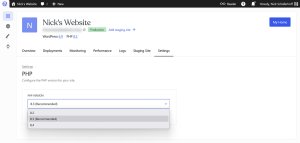
And if you want more control, you still have it. For example, on Business and Commerce plans, you can change your PHP version from the site settings — no server access required.
8. Use plugins to add features, not crucial infrastructure
On WordPress.com, security and performance are built in — so plugins serve to add features rather than fix fundamentals.
On many setups, you install plugins just to handle backups, security, or caching. Here, that infrastructure is already managed for you. For example, all WordPress.com sites come with Jetpack, which offers SEO tools, analytics, newsletter functionality, additional editor blocks, and more.
That means you can focus on adding capabilities instead — ecommerce, memberships, translations, forums, and more.
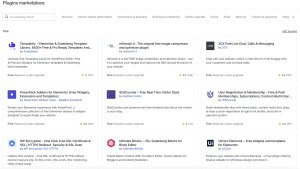
With access to over 50,000 plugins, you can shape your site around your goals, not around technical gaps.
9. Build locally, using the same environment
With WordPress Studio, you can test changes on your own computer in the same environment your live site uses — then sync them when you’re ready.
This is more relevant to developers than beginners, but it’s useful to understand. Local development gives you a safe space to experiment, redesign pages, or test features without visitors seeing half-finished work.
The tricky part with local development is usually deployment. If your local setup doesn’t match your live environment, things can break when you push changes.
WordPress Studio solves that by mirroring your WordPress.com environment, making it much easier to move changes from local to live without surprises. It also comes with reusable site blueprints, shareable preview sites, and selective push and pull.
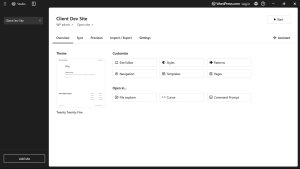
Tip: Other WordPress.com developer features include free staging sites, SFTP/SSH, WP-CLI, Git commands, and GitHub deployments.
10. Keep your site fast and secure over time
Website performance and security are usually ongoing projects. But, as we’ve already settled, on WordPress.com this happens at the platform level, so you don’t have to worry about it at all.
Keeping a site fast and protected means adjusting cache plugins, configuring security tools, and monitoring logs over time. Here, that work happens behind the scenes.
Features that keep your site resilient include:
- Automated data center failover.
- Built-in spam protection.
- A detailed site activity log.
And if you ever need a hand, WordPress.com’s Happiness Engineers are available 24/7 to help.
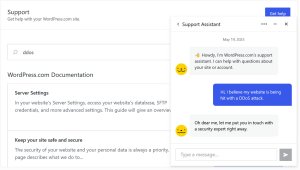
Besides, WordPress is one of the most rigorously tested and actively maintained software projects in the world, with thousands of contributors and a dedicated security team.
On WordPress.com, that foundation is reinforced with managed infrastructure that keeps your site protected as you grow.
11. Expand what your site can do — without starting over
On WordPress.com, you can redesign, extend, and turn your site into something bigger without changing platforms or rebuilding from scratch.
Your website might start as a simple blog or portfolio. Later, you might add a shop, memberships, bookings, or a newsletter. On many setups, that means migrating systems, upgrading servers, or reworking your entire stack.
Here, you build on the same foundation.
You can refresh your design using native blocks, patterns, and themes — and use tools like newsletters. You can also add ecommerce, payments, or other features through plugins.

And you can do it all without touching hosting, security, or performance settings behind the scenes.
12. Keep full ownership of your website
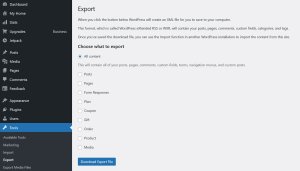
With WordPress.com, your content and data remain yours forever — and you can export them if you ever decide to move.
Some proprietary website builders make it difficult to take your site elsewhere, limiting how easily you can export your content, structure, or integrations. While self-hosting WordPress gives you full ownership, it also means full responsibility for managing everything.
WordPress.com runs on the open-source WordPress software, which means your content isn’t trapped in a proprietary system. If your needs change, you can export and migrate your site without rebuilding it from scratch.
13. Get out of the maintenance loop
On WordPress.com, most routine upkeep happens automatically, so you’re not constantly managing your site behind the scenes.
It’s great that WordPress and its components receive regular updates. But keeping WordPress core, themes, plugins, and infrastructure up to date can turn into an ongoing cycle of small tasks and checks.
Here, those updates — along with performance and security management — are handled for you.
That means less time maintaining your website and more time using it to move your work or business forward.
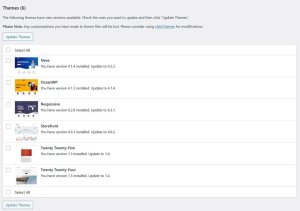
WordPress core is updated automatically on all plans; themes are maintained for you.
On Business and Commerce plans, plugins can be updated automatically as well. Server-level components like PHP are managed by WordPress.com behind the scenes.
14. Migrate your site without downtime
Finally, WordPress.com also helps you seamlessly migrate your website, whether you do it yourself or with expert help.
Moving hosting providers comes with a long list of to-dos. You have to move all parts of your site, fix compatibility issues with the new environment, and cross your fingers that the website won’t go down during the switch.
To avoid this, on WordPress.com Business and Commerce, migration and launch happen as separate steps:
- Create a new, empty site.
- Clone your existing site into it (your original site stays live on your old host).
- Review the WordPress version, pages, plugins, etc., in the new environment.
- Switch your domain when you are 100% ready.

Your visitors won’t even notice the change. Better yet, you can choose the “do it for me” option and the WordPress.com team will handle the migration for you, and then guide you through the final steps.
Make your life easy — Choose WordPress.com
The difference of hosting your site on WordPress.com versus elsewhere doesn’t come down to a single feature — it changes your entire experience of website ownership.
From the beginning, your site lives in an optimized, centrally managed environment that it never has to leave, no matter how much you grow.
This reduces the technical work necessary to keep it running smoothly, allowing you to focus on what really matters and moves the needle. At the same time, you retain full ownership and control over your site.
Ready to make this a reality for yourself?
-
Telex Updates: From Napkin Sketch to WordPress Block (and More)
19 febbraio, di Semiha Kocer — Changelog, News, AI Tools, Block Development, Telex, WordPress BlocksWhen we launched Telex back in August, we invited everyone to experiment with AI-powered block creation.
Since then, thousands of you have built blocks, shared feedback, and pushed the tool in directions we didn’t expect.
That enthusiasm kept us going. Here’s what’s new.
1. Show Telex what you want to build
You can now upload reference images when describing your block. A Figma mockup. A screenshot of a design you like. A napkin sketch.
Upload it alongside your prompt and let Telex see what you’re imagining.
<script src='https://v0.wordpress.com/js/next/videopress-iframe.js?m=1770107250'></script>This helps most with complex layouts — or when you’re chasing a specific aesthetic. Instead of writing a detailed description of how every element should be arranged, just show it.
A picture is worth a thousand prompt words, or so they say.
2. Work in your favorite editor, then come back
One of our most requested features — editing blocks outside of Telex — is here.
Download your block, open it in VS Code, Cursor, or whatever you prefer (we’re not starting that debate), and make your changes. Then upload the zip back to Telex to keep refining with AI.

This round-trip workflow bridges AI generation and traditional development. It’s early days — we’ll keep improving it.
3. Explore previous versions risk-free
Version history now works better. When you restore a previous version, Telex creates a new version instead of overwriting your current work.
This means you can explore past iterations, compare approaches, and recover that thing you deleted three prompts ago.
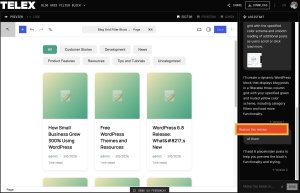
Your past mistakes are now just research. Or as we call it: iterative development.
4. Telex speaks your language
Telex is now available in 7 languages for you to create blocks and experiment.

We also fixed an issue where Japanese, Chinese, emoji, and other multi-byte characters weren’t streaming correctly.
5. Small improvements that add up
We’ve also shipped a bunch of smaller fixes:
- Dynamic page titles: Juggling multiple blocks in different tabs? The page title now matches your selected project.
- Save confirmations: Manual code edits now show a “Files updated” message. You’ll always know your changes took.
- Shorter share links: Cleaner URLs that are easier to pass along.
- Changelog page: Want to keep up with every update? We now have a dedicated changelog. It’s like release notes, but we actually write them.
Keep experimenting
Telex is a living experiment. Your feedback shapes where it goes.
Spin up a block. Try the image upload. Tell us what’s working and what isn’t — in the comments or through the in-app feedback form.
-
Lily Burton Is Pivoting from PhD to Science Journalism. Her Portfolio Took an Hour to Build — and Already Landed Her Work.
18 febbraio, di WordPress.com Staff — Customer Stories, AI website builder, portfolio, success stories, wordpress-com Lily Burton spent years in the lab. PhD in biochemistry and molecular biophysics at the University of Chicago. Deep research. Big questions.
But something was missing.
“I really enjoyed thinking about very deep questions,” she says. “But I kind of missed the human element. I would get frustrated — why should a normal, everyday person care about this?”
That question led her toward science writing. And eventually, to a portfolio she built in an hour using our AI website builder.
From lab to byline
To pursue her science writing dream, Lily built up slowly. Volunteer projects. Small bylines. Then, in late 2023, she applied to the AAAS Mass Media Fellowship — mostly as practice.
She got in.
Ten weeks at a public radio station in North Carolina, reporting on science. That was the moment it became real.
“This might actually be something I could do.”

The portfolio problem
But to get paid work, she needed a portfolio. A place to show her clips. Proof she could do the job.
She kept putting it off.
I had been dreading making the website — not because it would be so hard, but I just didn’t know exactly how to do it.
Then a deadline hit. An internship application. Four hours to finish everything — resume, cover letter, portfolio.
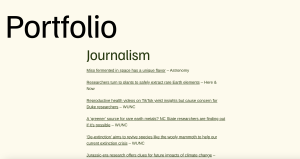
She opened WordPress.com, found the AI website builder, and started typing. About an hour later, her online portfolio was live.
It lowered the barrier for me to get started and get everything together.

What Lily’s new website delivered
She didn’t get that first job. But the website stuck around.
A few weeks later, another interview. They wanted writing samples. She sent the website immediately.
As a result, Lily got:
- Contract work from that company
- A separate internship
- A portfolio ready to send whenever opportunities come up
They asked for writing samples. I sent them my website. I got the contract.
Your story deserves a home, too
Lily had been putting off her portfolio for too long. A deadline forced her hand — and the AI website builder got her there in an hour.
WordPress.com’s managed hosting also means she’s not dealing with updates or maintenance. She focuses on her career. The platform handles the rest.
Her story started in the lab. But her website is where the next chapter begins.
Yours can too.




 RSS 2.0